Learn More
Clearing the Way: How Fence Removal is Connecting Our Open Spaces

Staff and volunteers celebrate a successful day removing old fencing from Snowmass Falls.
What do Glassier, Sky Mountain Park, Filoha Meadows, Redstone Boulders, and North Star Nature Preserve have in common?
Each of these Pitkin County open spaces was once shaped by the rhythms of ranching and farming. Fences crisscrossed the Roaring Fork and Crystal River Valleys to manage livestock and mark property lines, and were considered a staple of rural life when Colorado’s “fence-out” law made it the landowner’s responsibility to keep cattle off their property. That law remains in place, as do many fencelines still used for ranching and grazing across public and private lands. Nevertheless, times change, landowners change, and priorities change. Today, some fences tell a new story: one of restoration, reconnection, and shared stewardship.
North Star alive with the sound of birds
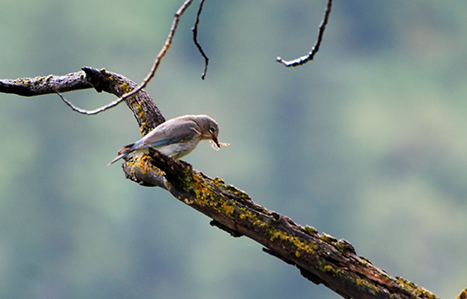
A female Mountain bluebird at North Star.
On the far west side of North Star Nature Preserve, the vegetation closes in like a jungle. Overnight rain still drips from every leaf, and in dawn’s early light, the clouds hang low over the upper Roaring Fork Valley. It’s a part of North Star that rarely sees a human visitor. On occasion, access is granted for research or stewardship. Today, we’re conducting a formal scientific survey of “avifauna,” aka birds.
What’s disappearing from our forests? Birds
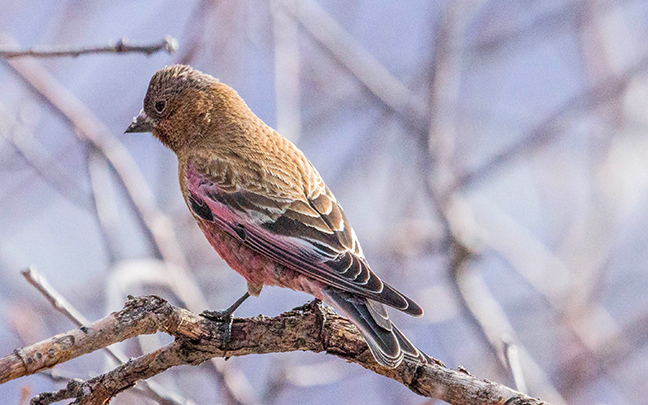
A Brown-capped rosy finch. Mark Fuller photo.
What do the Brown-capped rosy finch, Rufous hummingbird, Evening grosbeak and Pinyon jay all have in common? Well, they are all beautiful. They’re also among the bird species that could become a rare sight in the Roaring Fork Valley, if we see them at all.