A Piece of Glassier History for Today
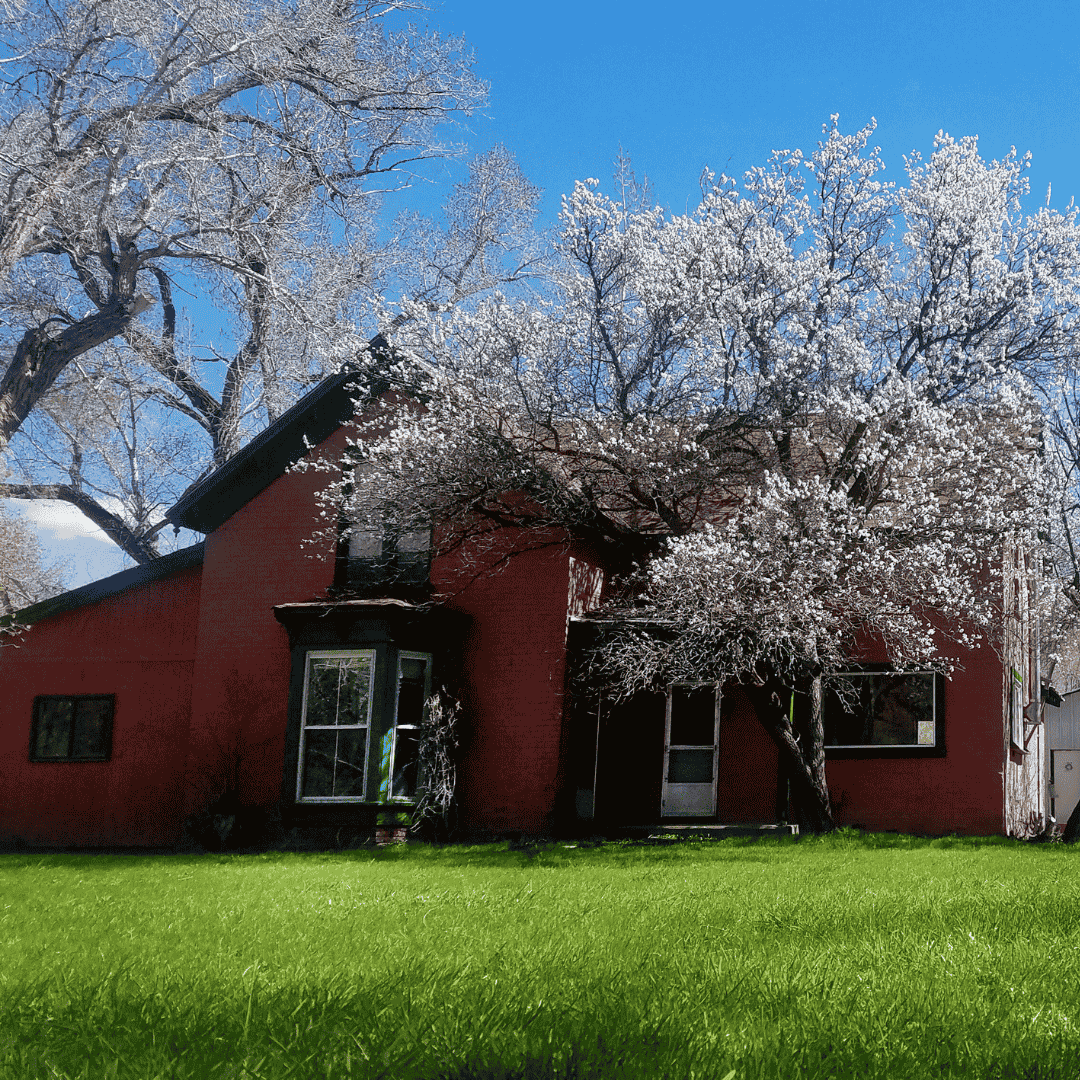
Historic Glassier Farmhouse (2020)
Take a drive along Colorado Highway 82 and follow the Roaring Fork River to Emma, a ghost town that thrived 125 years ago. Emma was becoming a bustling community by 1900, with a depot on the Rio Grande Railroad, a school, merchants and services, and several growing families.
But there is another mid-valley story to be told. It’s just outside of town. It involves a vast valley, fertile farmland, and immigrants from the Italian Aosta Valley. Ranching and farming took hold in the area. Take a hike or bike ride down the Rio Grande Trail, just north of the Pitkin-Eagle Countyline, and you’ll cross the property we’re talking about.
See the old brick farmhouse over there? Frederick L. Glassier and his wife, Freda, purchased the property to continue their family’s farming legacy. Frederick L. Glassier was the son of Frederick H. Glassier, who homesteaded the area in 1891.
When Frederick H. Glassier first cultivated the land in the mid-valley region, ranching was steady, while agricultural crops were iffier. Potatoes seemed to thrive in the red earth soil, though – the variety, the “Red McClure,” in particular. The years passed, potatoes flourished, and Fred and his wife, Adele, had six children, five of whom lived until adulthood. The love of the land, ample water from the neighboring Home Supply Ditch for irrigation, and good markets were all keys to the Glassier family’s successes.
The first half of the century was profitable for the Glassiers, even during the Depression and on into the 1950s, when daughter Joyce noted, “The Red Soil was the money maker.”
Among Fred and Adele’s family was namesake Fred L. Glassier, who, along with his wife Freda, bought the Glassier farmhouse that stands today. Built in 1904, the redbrick structure was home to Fred L. and Freda, and their two children for decades. Their barn and other outbuildings can also still be found on the property. The family worked hard and was quite self-sufficient with cattle (ran over 100 head), pigs, chickens, a few dairy cows, and some fruit trees on the place.
Sadly, in the later years of owning the property, produce slowly dwindled, workers grew scarce, and Fred passed away. Freda was able to maintain a few cattle on the property until age 84. She died in 2009 at age 93 in the Glassier farmhouse, a family treasure she had maintained for 61 years.
The farm could have been turned into commercial property. Large acreages could have been staked out. Huge homes (and profits!) could have been built there, with pristine views of the Roaring Fork River, the distinctive red cliffs nearby, the sprawling valley to the southeast, and majestic mountains in the outlying distance.
But several saw the glowing history in the sagging structures and the still-fertile farmland, its red soil, and the rights to water from the Home Supply Ditch as vital to bringing the fantastic story to life once again.
In 2013 and 2014, Pitkin County Open Space and Trails, along with Eagle County, Great Outdoors Colorado, the Town of Basalt, and the Mid-Valley Trails Committee, partnered to purchase the 282 combined acres of Glassier Open Space. In 2015, the first Glassier Open Space Management Plan was adopted. Since then, Open Space and Trails has been managing and rehabilitating the property to uphold community goals and historic preservation standards. The Glassier Farmstead is currently in phase one of rehabilitation, which includes restoring the historic Victorian Glassier Farmhouse. Other structures and improvements on the farmstead will be addressed in the future.
Learn more about the Glassier Farmstead and rehabilitation efforts.
-By John Cutler, guest author
Note: This story was edited on February 25, 2026, for accuracy. For a more complete history of the Glassier family and farmstead, see the Glassier Open Space Management Plan.
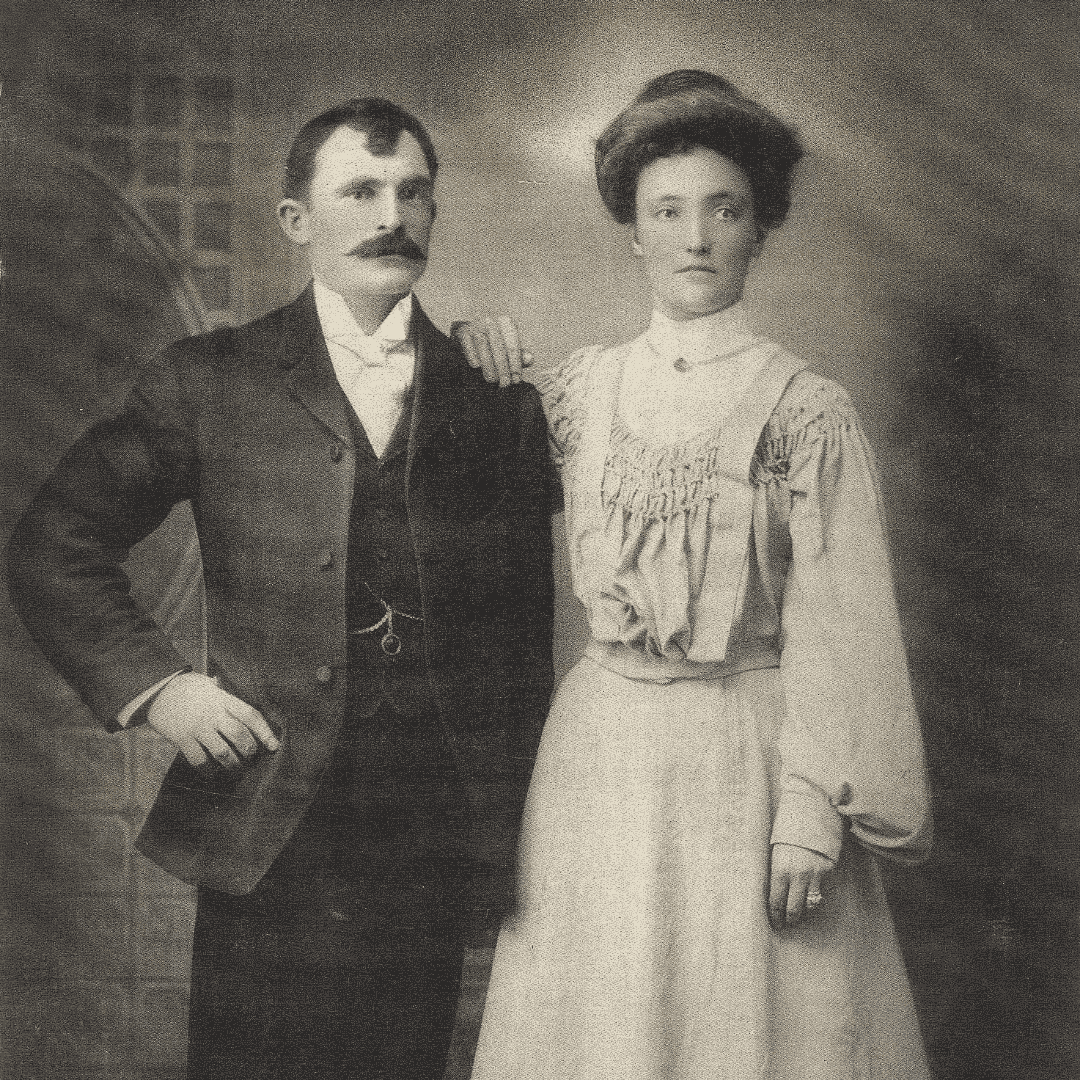
Fredrick H. and Adele Glassier. Photo courtesy of Randy and Wendy Glassier.